About Gypsum Ceiling Tiles
Gypsum Ceiling Tiles Description
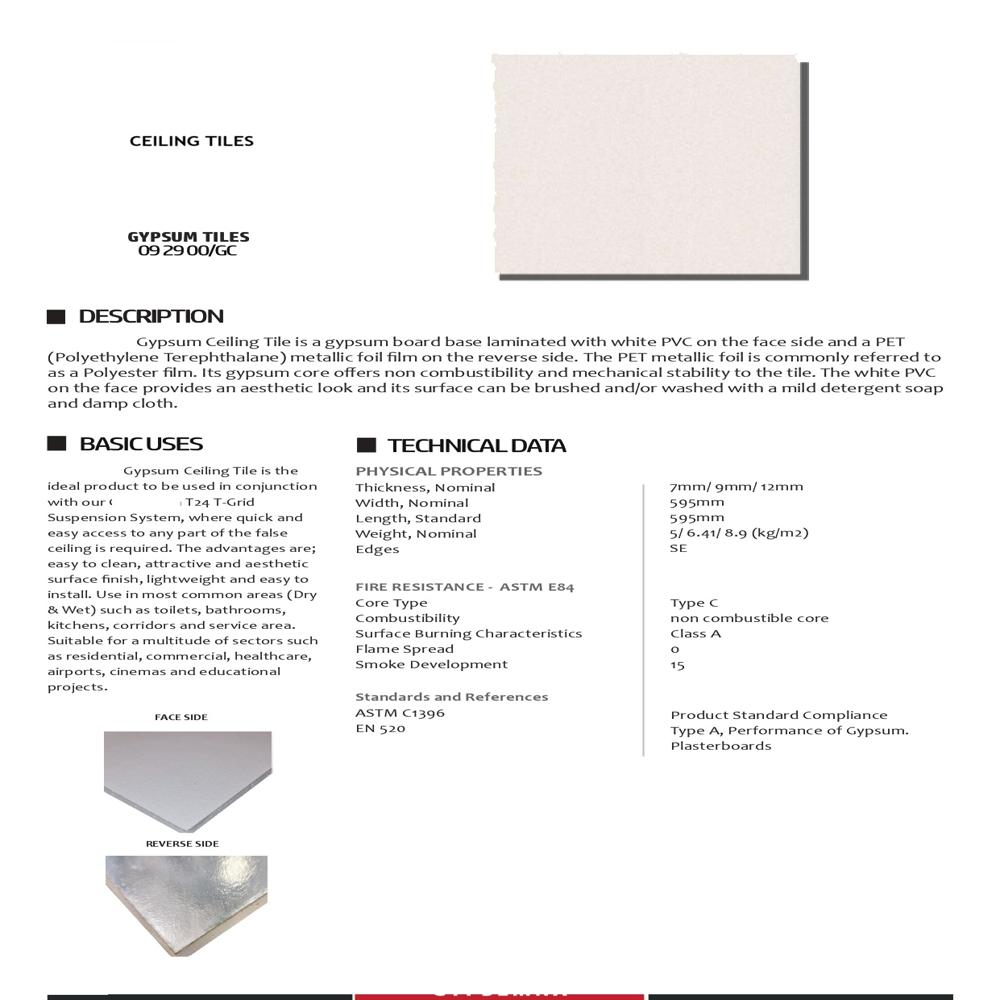
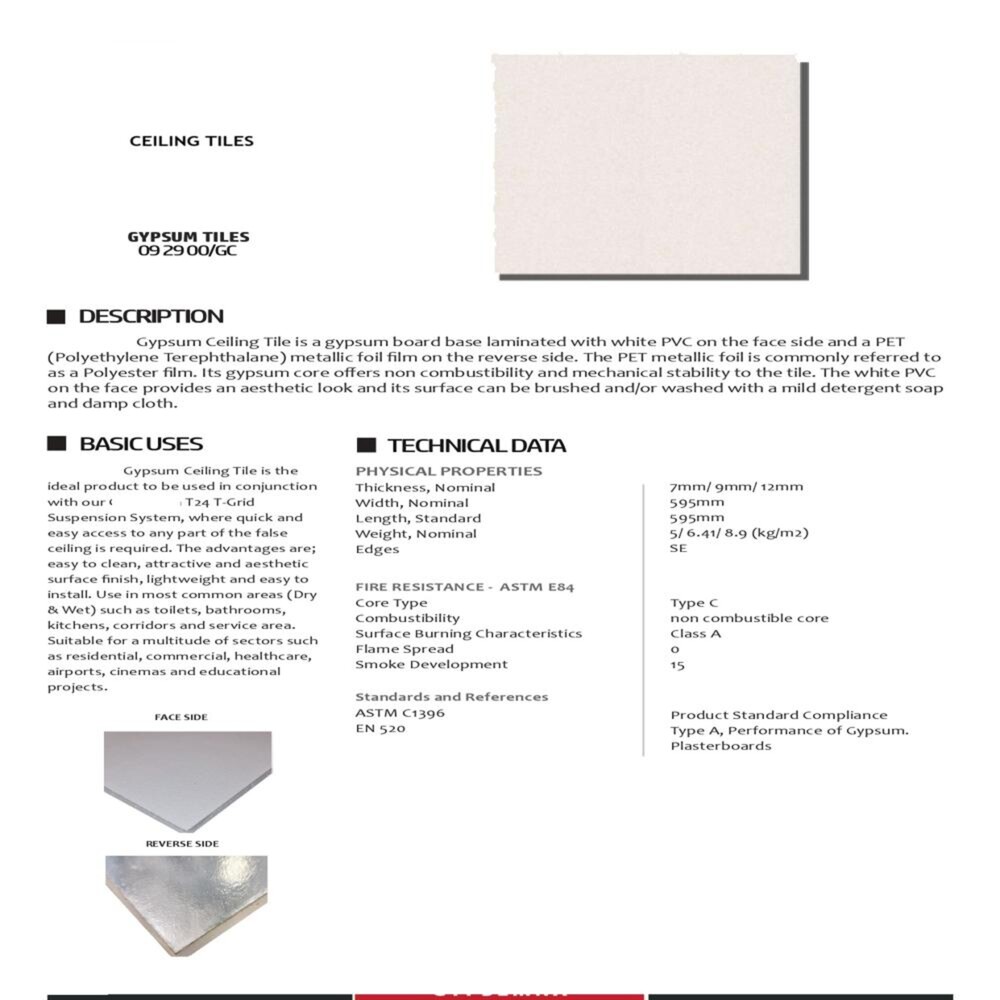
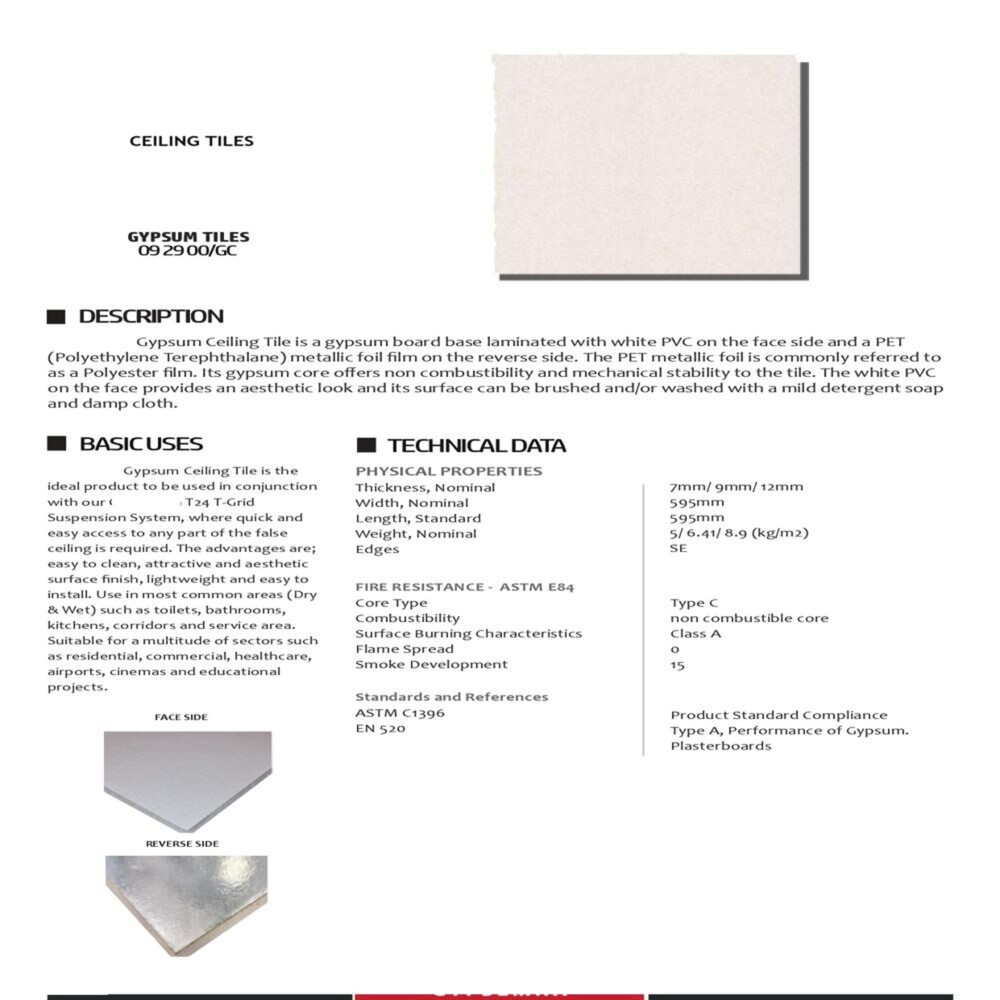
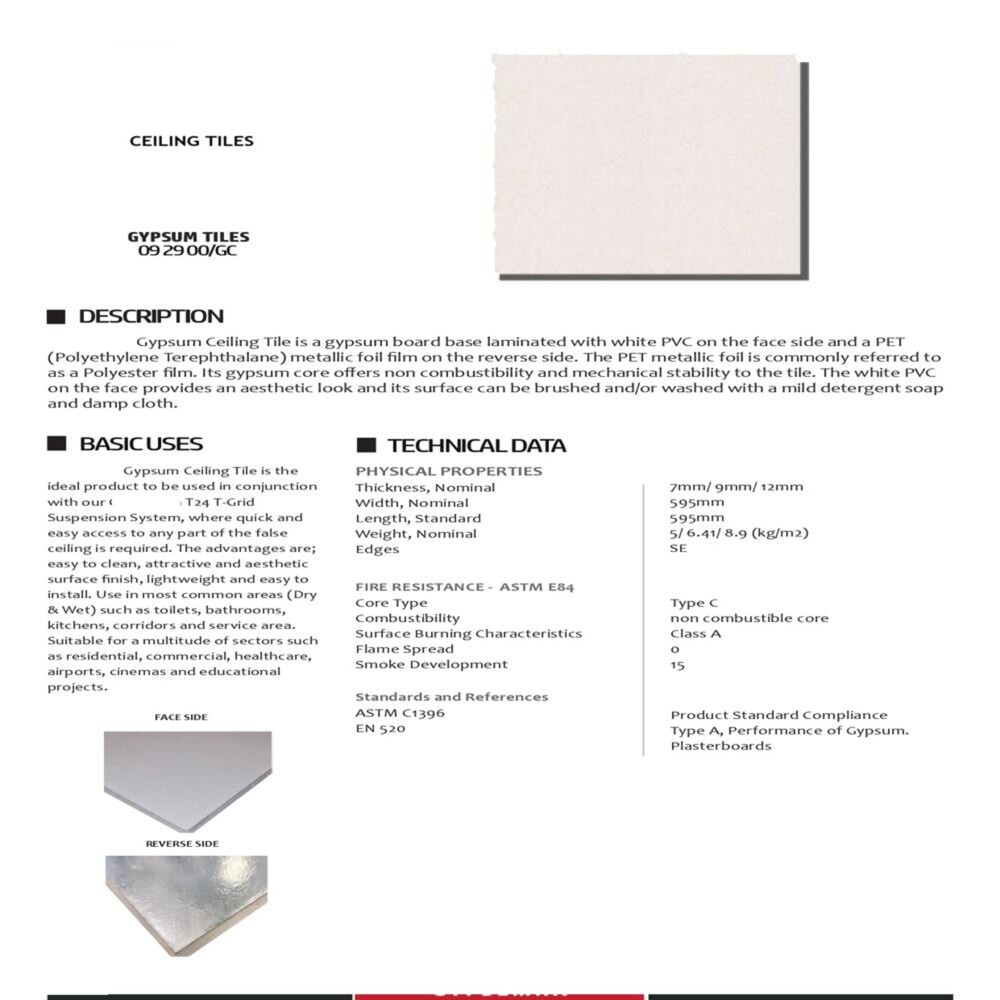
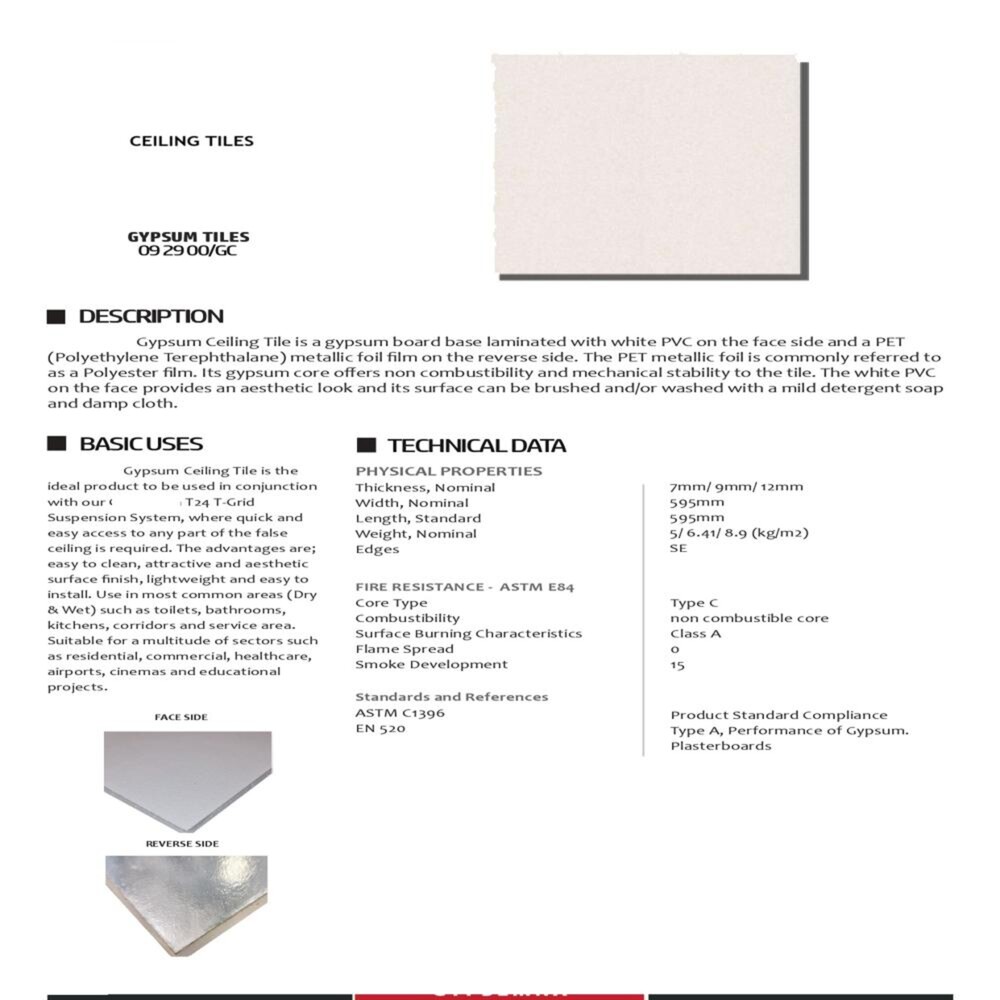
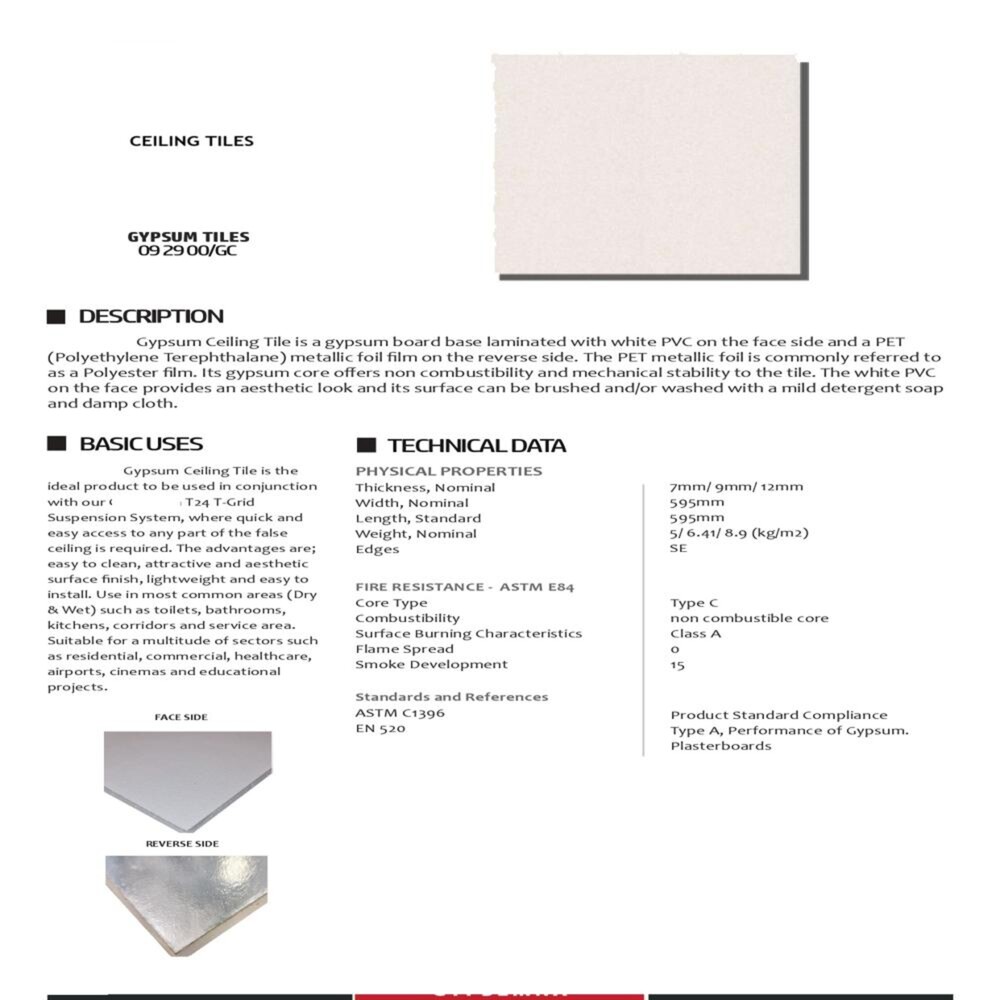
Gypsum Ceiling Tiles are high-quality ceiling panels manufactured from natural gypsum and reinforced with special additives for strength and durability. They are widely used in modern interior construction for suspended ceiling systems, providing a smooth, elegant finish while improving the functional
performance of interior spaces.
Key Benefits
-
Fire Resistant: Gypsum contains chemically combined water, which provides excellent fire resistance and enhances building safety.
-
Thermal Insulation: Helps reduce heat transfer, keeping indoor spaces more comfortable.
-
Sound Absorption: Improves acoustic performance by reducing noise levels in rooms.
-
Lightweight & Easy Installation: Easy to handle and install in grid ceiling systems, saving time and labour costs.
-
Smooth & Aesthetic Finish: Creates a clean, uniform, and modern appearance for interiors.
-
Low Maintenance: Durable and resistant to cracks and deformation.
-
Wide Applications: Ideal for offices, homes, hotels, hospitals, schools, shopping malls, and commercial buildings.
Superior Fire and Moisture ResistanceOur gypsum ceiling tiles are engineered to withstand challenging environments, offering both Class 0 and Class 1 fire ratings, and moisture content below 5%. These features ensure safety, longevity, and minimal deformation, making them ideal for spaces that demand high performance and reliability.
Designed for Easy InstallationThe tiles are tailored for suspended ceiling grid systems, allowing for straightforward and efficient installation. Their non-warping, quick-drying characteristics simplify the process for builders and reduce downtime, ensuring seamless integration into a variety of interior decors.
Optimally Functional and AestheticWith a choice between plain or textured surfaces and colors in smooth white, these tiles provide excellent light reflectance, enhancing ambient brightness. Their sound-absorbing properties contribute to a more comfortable and quiet indoor atmosphere, perfect for offices and educational facilities.
FAQ's of Gypsum Ceiling Tiles:
Q: How are gypsum ceiling tiles installed in interior spaces?
A: Gypsum ceiling tiles are designed to be installed using a suspended ceiling grid system. This method involves fitting the tiles into a metal framework attached to the ceiling, allowing for quick positioning, easy alignment, and straightforward removal for maintenance or replacement.
Q: What are the primary benefits of using gypsum ceiling tiles in commercial or residential projects?
A: These tiles offer remarkable fire and moisture resistance, high sound absorption, and superior light reflectance. Combined with their recyclable, asbestos-free composition, they contribute to safer, more comfortable, and energy-efficient indoor environments while providing aesthetic versatility.
Q: Where can gypsum ceiling tiles be effectively used?
A: Gypsum ceiling tiles are suitable for a wide range of applications, including offices, hospitals, classrooms, retail stores, and homes. Their fire resistance, moisture control, and sound absorption qualities make them well-suited for commercial, residential, educational, and healthcare buildings.
Q: What distinguishes square edge from tegular edge ceiling tiles?
A: Square edge tiles lay flush with the suspension grid for a smooth, seamless appearance, while tegular edge tiles slightly drop below the grid, creating a dimensional, shadowed effect. The choice depends on the desired visual and architectural style of the interior.
Q: How do gypsum ceiling tiles enhance insulation and energy efficiency?
A: With low thermal conductivity, these tiles act as effective barriers to heat transfer, helping to maintain indoor temperatures. This insulation property reduces energy consumption for air conditioning or heating, translating into cost savings and improved environmental efficiency.
Q: What maintenance is required for gypsum ceiling tiles over time?
A: Gypsum ceiling tiles require minimal maintenance. Regular dusting and occasional wiping with a dry or slightly damp cloth suffice. Their moisture-resistant and non-warping properties help maintain their appearance and structural integrity over time.






 Send Inquiry


 Send Inquiry